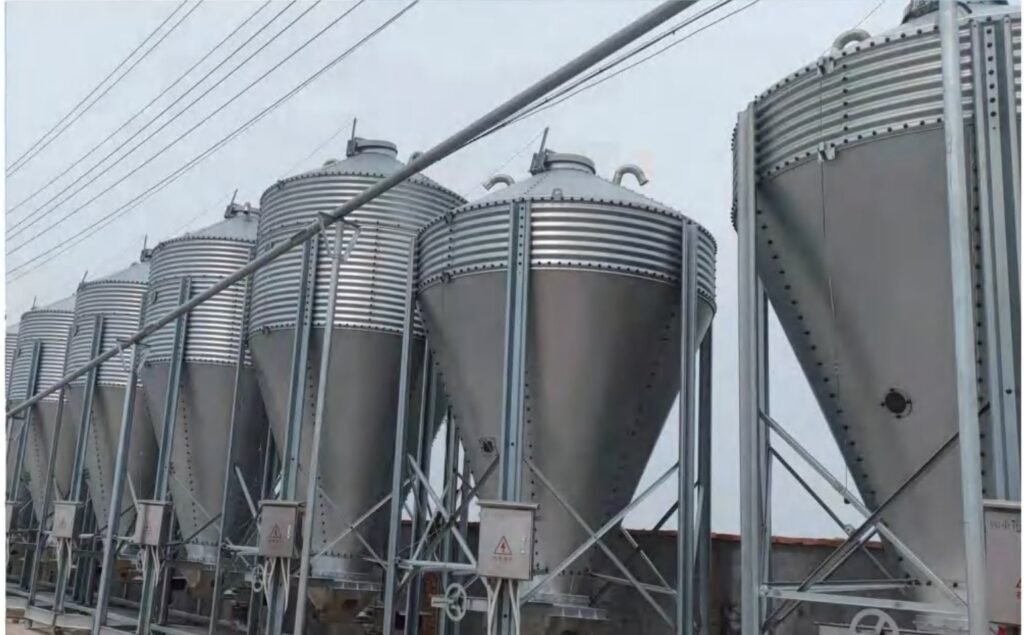
A pig feed silo comparison is more useful when the buyer begins with the storage and site information that affects the discussion. This guide helps farm managers, distributors and contractors prepare the inputs needed to compare models without treating nominal volume, material or an outlet image as a complete project specification.
What a Pig Feed Silo Needs to Match
A silo is one part of a storage-and-delivery arrangement. Published swine guidance discusses feed moving from a storage bin to pens through a feed auger line, while the actual equipment relationship still depends on the feed, chosen product family, site position and downstream layout. Use the pig feed silo options page for documented product-family references and the automatic pig feeding system page when the project scope includes the wider storage, conveying, distribution and control relationship.
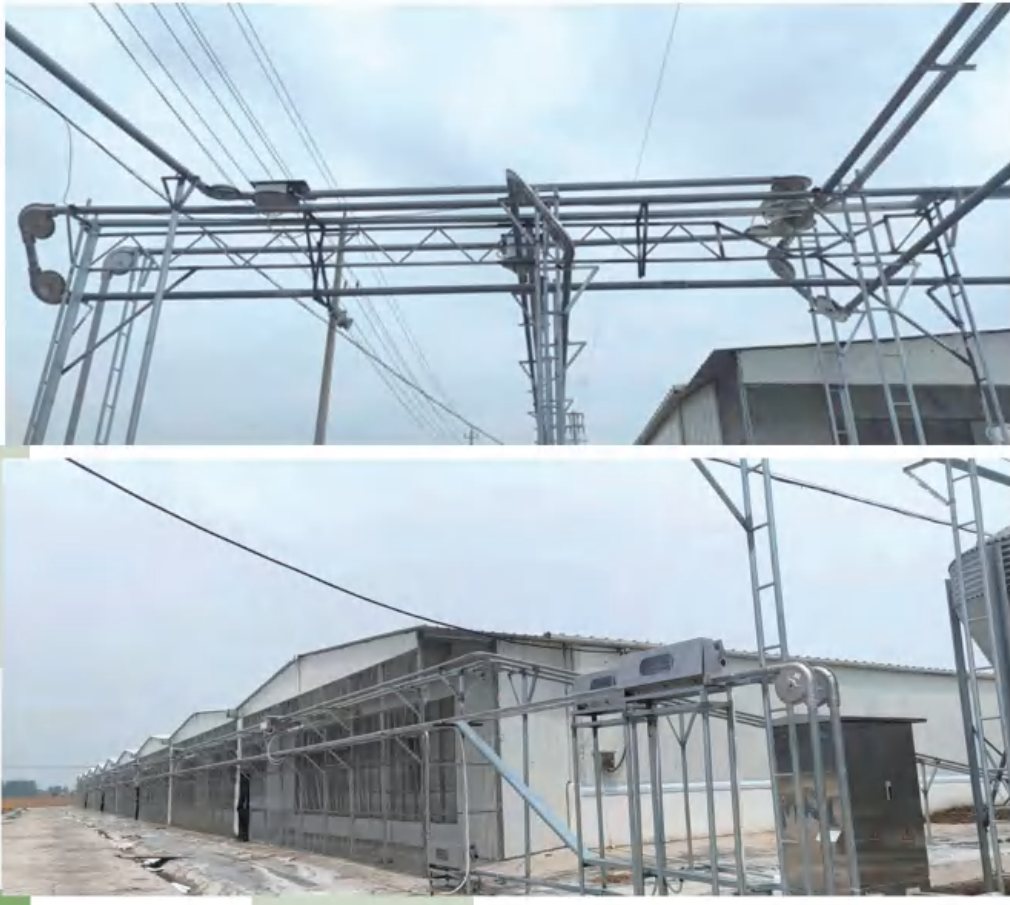
For route-planning questions, see pig feed delivery line planning.
7 Inputs to Check Before Selecting a Pig Feed Silo
1. Required Storage Volume and Refill Interval
Start with the storage requirement and the refill pattern that the farm or distributor needs to plan. These are buyer inputs, not a universal refill recommendation. A nominal-volume figure is useful for comparing documented models, but it does not by itself state the usable feed mass for every feed or project.
2. Feed Type and Bulk Density
Describe the feed form and any known handling information. University of Minnesota guidance notes that physical properties, bulk density and flow characteristics can matter in storage and handling. This is why a product comparison should record the actual feed context rather than apply one density or handling assumption to every pellet, meal or ingredient blend.
3. Silo Position and Available Site Space
Identify the proposed position, available footprint and access for feed delivery. Pork Industry guidance treats bin location and delivery conditions as procurement questions. Share the practical site information available; this article does not provide foundation, wind, snow or civil-design advice.
4. Pig-House Grouping and Delivery Layout
List the pig houses or areas the stored feed is intended to serve and provide a layout or sketch when available. This establishes the scope of the handoff from storage to the delivery system without turning the article into a whole-system design.
5. Outlet and Feed-Line Connection
Record the existing or requested outlet, hopper or transition and the proposed line family. A pig feed delivery line is a connected interface, not an automatic match for every silo. Share available dimensions, photos and the intended route so configuration can be reviewed together.
6. Material and Configuration Questions
Documented KAMOF references include a galvanized steel family and fiberglass as a separate model-dependent direction. The buyer question is what material and configuration needs should be confirmed for the project, not which material is universally superior. The documented galvanized reference table is useful for its named models only.
7. Site Access and Optional Equipment Inputs
Note delivery access, destination, available drawings and any optional-equipment request. Existing KAMOF evidence includes load-cell weighing and anti-blocking components as model-dependent configuration discussions. That evidence does not establish universal inclusion, accuracy, monitoring or flow guarantees.
Nominal Volume vs Feed Mass: Why Bulk Density Matters
Nominal volume and feed mass are related but are not interchangeable labels. Bulk density is one factor in interpreting a volume figure, and feed characteristics may also affect handling discussion. For that reason, do not turn a nominal-volume table into a universal tonnage promise. KAMOF’s documented galvanized reference configurations range from approximately 1.9 to 51.7 m3 only for the selected galvanized references; they do not define every KAMOF silo, fiberglass configuration or farm requirement.
| Selection question | Why it matters | What to provide |
|---|---|---|
| Storage need and refill context | It gives the comparison a project context rather than an assumed schedule. | Current storage requirement and planned delivery pattern. |
| Feed information | Feed form and physical characteristics can affect handling discussion. | Feed type, form and any relevant supplier information. |
| Storage-to-line interface | It identifies the handoff that must be checked with the selected line family. | Outlet or hopper photos, known dimensions and the route sketch. |
Galvanized and Fiberglass: Questions to Ask Rather Than Assume
Ask which material family, model references and configuration details are documented for the request. Avoid assuming that a galvanized and fiberglass option has the same capacity, support arrangement, outlet or line connection. For the current public KAMOF evidence, selected galvanized references have documented model data, while fiberglass remains a separate configuration discussion requiring confirmation.
Information to Prepare Before Requesting a Quote
Provide the storage need, feed description, preferred silo position, house grouping, available site space, refill and delivery context, outlet or feed-line information, material questions, required quantity, destination and any layout drawing or project photos. This enables a configuration discussion without assuming a fixed model. For a broader equipment brief, use the pig feeding equipment categories hub or browse KAMOF product categories. When ready, use the contact page for a quotation discussion. For a cross-category buyer overview, use the pig farm equipment guide.
Common Pig Feed Silo Selection Mistakes
- Comparing nominal volume without first describing the feed and storage context.
- Selecting a silo before confirming its proposed position and delivery access.
- Assuming all outlet and delivery-line connections are interchangeable.
- Treating galvanized and fiberglass references as identical model families.
- Leaving the downstream feed-line route and project layout until final quotation.
- Assuming optional weighing or discharge components are standard on every configuration.
These are planning checks, not predictions of project failure. Their purpose is to help the buyer provide information that supports a more specific product comparison.
Technical Sources
For general feed-storage context, see University of Minnesota Extension guidance on mixing and storing swine feed, its discussion of DDGS physical properties and storage-bin flow, and Purdue Extension’s swine nutrition guidance. For storage-to-delivery context, see Pork Information Gateway’s feeding systems overview and its purchasing and delivery guidance. These sources support the general planning context, not a KAMOF performance claim.
Next Step
Use the available inputs to compare documented silo references and discuss the storage-to-line interface. Final model and project configuration remain specific to the selected product family and quotation review.
Technical Basis: University and industry educational sources support general feed-storage and handling context. Documented KAMOF references support only the stated product-family facts. This guide is not an engineering certification, structural design or universal silo-sizing calculation.